

Losing weight is not just about eating less — it’s about eating right. Many people start a weight loss diet but give up because it feels confusing or too strict.
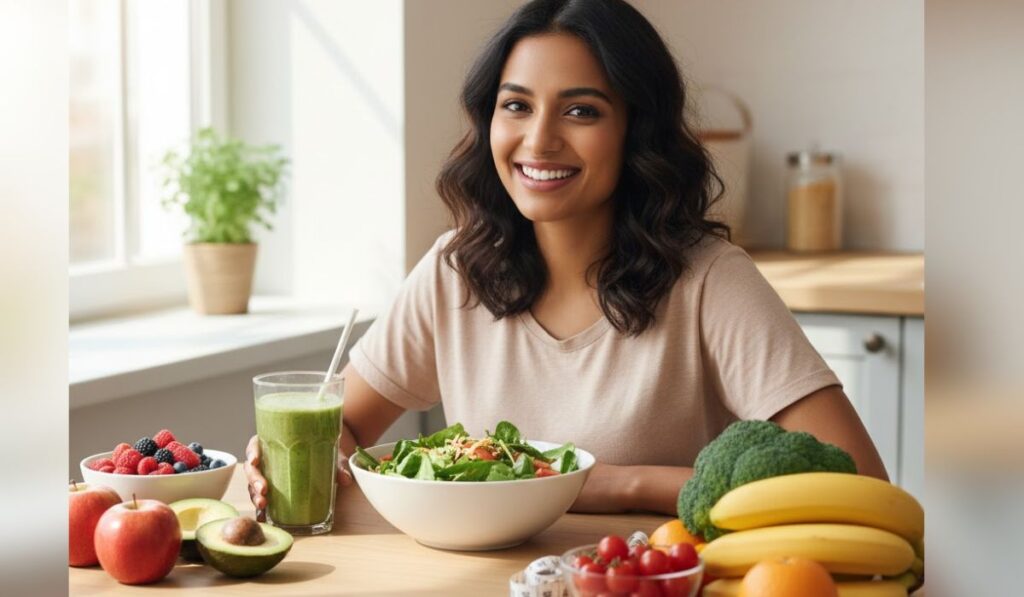
This guide will help you understand how to eat better, stay healthy, and lose weight naturally.
Table of Contents
1. Why Do We Gain Weight?
The main reason for weight gain is calorie imbalance — when we eat more calories than we burn.
Our body stores that extra energy as fat.
But calories are not the only reason. Some common causes include:
- Eating too much fried or sugary food
- Soft drinks and sweet juices
- Lack of physical activity
- Poor sleep and high stress
- Irregular meal times or overeating
When you understand the real reason, it becomes easier to fix it.
2. What Is a Healthy “Weight Loss Diet”?
A good weight loss diet gives your body all the nutrients it needs — without too many calories.
You should never starve yourself; instead, eat balanced meals that keep you full and active.
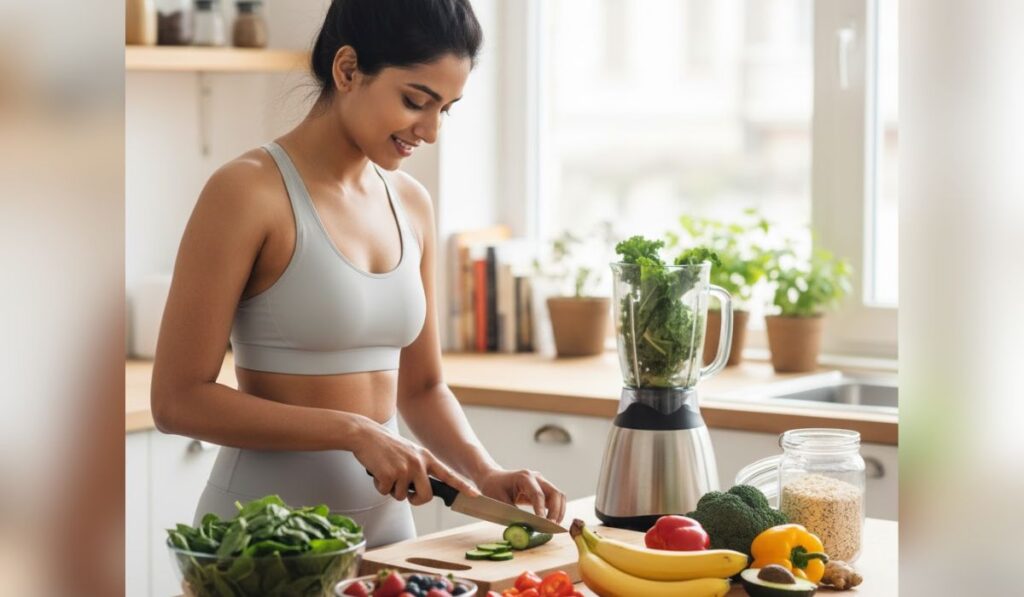
(A) Focus on These 3 Important Nutrients
- Protein – Helps build muscles and keeps you full longer.
Examples: lentils (dal), chickpeas, paneer, eggs, milk, curd, soybeans.
(Healthline says protein helps control appetite and boost metabolism.) - Fiber – Keeps digestion smooth and prevents overeating.
Examples: whole grains (wheat, oats, millets), fruits, vegetables.
(According to Medical News Today, high-fiber foods support long-term fat loss.) - Healthy Fats – Needed in small amounts for energy and hormone balance.
Examples: almonds, walnuts, flaxseeds, mustard oil, coconut oil (in moderation).
3. “Weight Loss Foods” — What to Eat to Burn Fat Naturally
Here’s a list of weight loss foods that help you stay full, eat fewer calories, and improve metabolism:
| Food | Why It’s Good for Weight Loss | How to Eat It |
|---|---|---|
| Leafy Greens (spinach, methi, broccoli) | Very low in calories, high in vitamins | Eat in sabzi, soup, or salad |
| Lentils, Chickpeas, Beans | High in protein and fiber | Eat as dal, sprouts, or salads |
| Oats / Dalia | Slow-digesting carbs, keeps you full | Eat for breakfast with milk or curd |
| Nuts (almonds, walnuts) | Good fats and protein | 4–5 nuts daily as snacks |
| Green Tea | Boosts metabolism slightly | Drink 2–3 cups without sugar |
| Fish / Eggs | Rich in protein, keeps muscles strong | Steam, grill, or boil instead of frying |
| Fruits (apple, papaya, orange) | Natural fiber and vitamins | Mid-morning snack or evening snack |
(Sources: Healthline, WebMD, and Indian Dietetic Association guidelines)
These are not “magic foods,” but they make your diet plan for weight loss more effective when combined with exercise.
4. “Weight Loss Drinks” — What to Drink and What to Avoid
Drinks are a hidden source of calories. Choosing the right weight loss drinks can make a big difference.
✅ Healthy Drinks for Weight Loss
- Water
The best and simplest drink. Drinking water before meals helps control hunger. - Green Tea / Herbal Tea
Contains antioxidants that may help boost metabolism. Drink without sugar. - Protein Shakes
If you can’t eat on time, a low-calorie protein shake can keep you full. - Lemon-Ginger Water or Turmeric Water
Helps digestion and supports detoxification naturally. - Black Coffee (without sugar or cream)
Boosts metabolism slightly, but don’t drink more than 1–2 cups a day.
❌ Drinks to Avoid
- Soft drinks and soda
- Sweet fruit juices
- Milkshakes and sugary coffee
- Energy drinks
All of these are full of sugar and calories that slow down your progress.
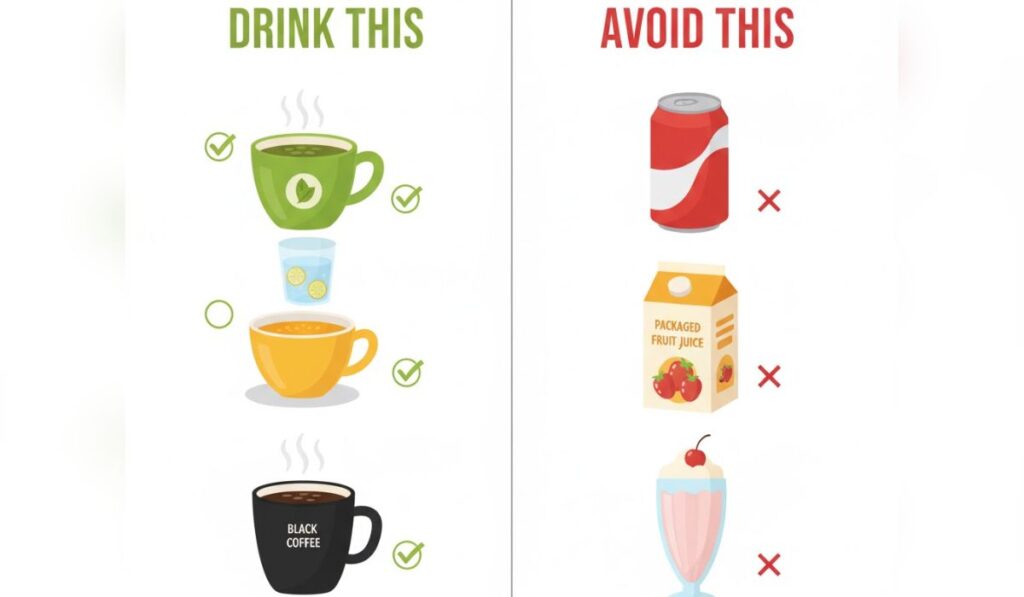
(WebMD recommends replacing sugary drinks with plain water or herbal teas for better weight control.)
5. “Weight Loss Diet Tips” — Simple & Effective Habits
Here are some easy-to-follow weight loss diet tips that actually work:
- Eat Slowly and Mindfully
Eating too fast makes you overeat. Chew properly and enjoy your food. - Control Portion Size
Fill half your plate with vegetables, one-fourth with protein, and one-fourth with carbs. - Never Skip Breakfast
Skipping breakfast can make you eat more later in the day. - Avoid Junk Snacks
Chips, biscuits, and sweets add calories but no nutrition. - Exercise 30 Minutes Daily
Walking, yoga, cycling, or climbing stairs — anything that moves your body helps. - Get Enough Sleep (7–8 hours)
Lack of sleep increases hunger hormones and reduces fat burning. - Be Consistent, Not Perfect
Weight loss is a slow process. Focus on progress, not perfection. - Track What You Eat
Keep a small food journal or use a free app to track your meals and calories.
(Healthline and Harvard Health studies confirm that tracking food intake helps long-term weight loss success.)
6. A Sample 7-Day Indian “Diet Plan for Weight Loss”
Here’s a simple example of a balanced Indian meal plan.
You can change it based on your region, taste, and food availability.
| Day | Breakfast | Lunch | Evening Snack | Dinner | Night Drink |
|---|---|---|---|---|---|
| Day 1 | Oats + curd + fruit | 2 rotis, dal, sabzi, salad | Apple / buttermilk | Roti + sabzi + curd | Green tea |
| Day 2 | Dalia / Upma + fruit | Rice (small portion) + sabzi + dal | Roasted peanuts | Bajra roti + paneer sabzi | Turmeric milk |
| Day 3 | Brown bread + boiled egg / paneer | Dal-chawal + salad | Fruit / cucumber | Roti + mixed veg | Herbal tea |
| Day 4 | Muesli + milk + fruit | Chapati + dal + sabzi | Sprouted moong | Roti + paneer | Green tea |
| Day 5 | Idli / Poha + chutney | Brown rice + veg curry + dal | Curd / fruit | Roti + lauki / bhindi | Lemon water |
| Day 6 | Poha + sprouts | Chapati + mixed dal + salad | Handful of nuts | Roti + sabzi + soup | Herbal tea |
| Day 7 | Oats / vegetable upma | Roti + sabzi + dal | Papaya / buttermilk | Chapati + sabzi + dal | Green tea |
Important Notes:
- Eat small, frequent meals every 3–4 hours
- Avoid deep-fried and sugary foods
- Drink plenty of water throughout the day
- Adjust portion sizes according to your body weight and activity level
(Based on Indian Dietetic Association and National Institute of Nutrition recommendations.)
7. Why This Works — Real Experience & Science
Many people believe “diets don’t work,” but in truth, extreme diets fail because they are not practical.
A sustainable plan — simple meals, fewer calories, more movement — always works.
“Calorie deficit is the key. You can eat Indian food and still lose weight if you control portions and cook smartly.”
— Fitness expert (source: Reddit India discussion on South Indian diet for weight loss)
Remember: the goal is long-term health, not just temporary fat loss.
When you eat balanced food, your body naturally burns stored fat and builds strength.
8. Precautions Before You Start Any Diet Plan
- If you have diabetes, thyroid, or blood pressure, always talk to your doctor or dietitian first.
- Don’t follow “crash diets” or stop eating — your body still needs nutrients.
- Avoid copying Western diets blindly; traditional Indian foods like dal, roti, and sabzi are excellent if cooked in the right way.
- Combine diet + exercise + proper sleep for the best results.
Final Thoughts — Eat Smart, Stay Fit
A diet plan for weight loss doesn’t mean giving up everything you love.
It simply means making smarter choices — more weight loss fruits and vegetables, less sugar and oil.
Focus on your overall lifestyle, not just one meal.
Follow these weight loss diet tips, choose the right weight loss foods, and include healthy weight loss drinks — and you’ll see results in a few weeks.
“Weight loss is not a race — it’s a journey towards a healthier, happier you.”
Stay consistent, keep learning, and make your health your top priority!